
[:en]Market Entry Manifesto[:ja]日本市場参入について[:]

[:en]Last week, a reporter from The Telegraph in the UK contacted me for my views on the challenges of market entry in Japan. My market entry manifesto is below:
[:en]Identify Cause. Never Presume. [:ja]大切なのは原因を突き止めること。仮定はすべからず。[:]

[:en] The CEO of a well-known US company in Japan contacted me recently to ask whether I thought flatter organizational structures are better than more hierarchical ones. He learned that vital information from the ranks was not getting to him fast enough and thought that a flatter structure might resolve the problem. He was, in fact, asking the wrong question, because his question presumes cause is organizational structure, whereas it might not be.
Mitsubishi vs. Japanese Culture
[:en] In light of the recent Mitsubishi scandal, Bloomberg invited me back to discuss Japanese corporate culture and whether or not Japan is to blame for the recent scandal. You can watch our discussion in the video above. If you’d prefer to read this interview, the following transcript has been provided by Bloomberg:
[:en]Conversation with Nihon Michelin CEO [:ja]日本ミシュランタイヤCEOから学んだこと[:]
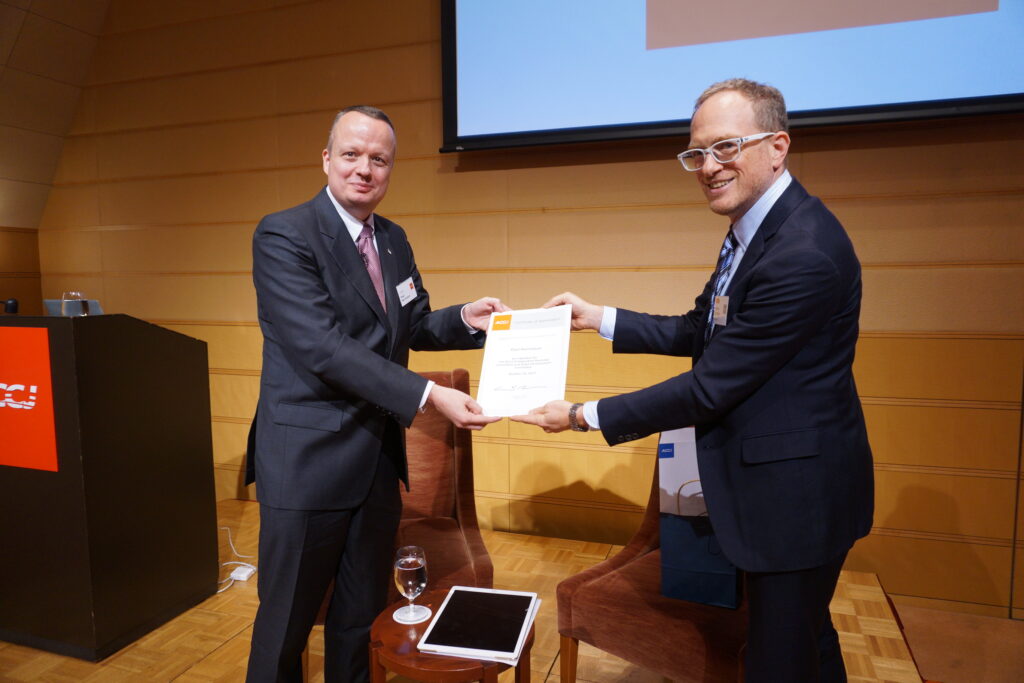
[:en]On October 19th, I conducted an on-stage conversation with Nihon Michelin CEO, Paul Perriniaux, at the Tokyo American Club for the American Chamber of Commerce in Japan and the French Chamber of Commerce. Here are a few of my takeaways.
[:en]It’s Never Because “This is Japan”[:ja]日本が企業問題の原因であることはない[:]

[:en]Address real root cause, and you can accelerate change in your business. Blame your ailments on Japan, and you will remain permanently stuck. It’s up to you. What is it about Japan that makes companies as they are? Below are a few statements from a company manager, many of which you might find familiar in your own experience in Japan.
[:en]Japan, Rotten to the Core? No.[:ja]日本の企業文化が芯まで腐敗しているというのは間違いである[:]
[:en]When you hear of malfeasance in American companies like Equifax, Wells Fargo, Valeant, Countrywide Financial and Washington Mutual of subprime mortgage crisis infamy, and even Enron, no one questions whether or not something is rotten in the whole of American corporate culture. So, why should we think differently when it comes to corporate malfeasance in Japan?
[:en]Kobe Steel vs. Japanese Culture[:ja]神戸製鋼と日本文化[:]
[:en] Bloomberg invited me to discuss the current situation with Kobe Steel and my take on Japanese culture and the role it plays (or does not) with respect to what is happening inside of corporations in Japan. If you’d prefer to read this interview, the following transcript has been provided by Bloomberg:
[:en]Leader Versus Minion Behaviors [:ja]リーダーとそうでない人との違い[:]

[:en]Who on your staff is leadership material, and who is…perhaps not? Forget personality profiling and engagement survey results. None of these tests have ever been scientifically validated, and can tell you as much about a candidate for a higher level of leadership as reading the entrails of a slaughtered chicken.
[:en]Big Consequences of Tolerating Small Infractions[:ja]たとえ小さくとも、違反は大きな影響を及ぼすもの[:]

[:en] Illicit and unethical behavior should never be tolerated, even if the impact is small. For example, if a manager is padding company expenses for personal gain, you really have no choice but to fire the manager, even if it is for less than a few hundred dollars per year. That can be a hard decision to make when the manager’s performance is high, such as a top salesperson, but it is the right decision. It is a matter of judgement and leadership of the manager rather than a cost-benefit analysis of the infraction.
[:en]Attitude Trumps Experience[:ja]経験より態度を重視すること[:]

[:en]I advised the vice-president to hire the less experienced candidate and you should hire the less experienced candidate too. Let me tell you why. Between two candidates for a sales manager role at a major international company, I advised a vice-president of sales to hire the less experienced candidate over a more experienced candidate because the former was growth-oriented whereas the latter was confident that he knew his business and alluded he had little left to learn. The vice-president hired the less experienced candidate. What do I mean by growth-oriented?
 Japanese
  English